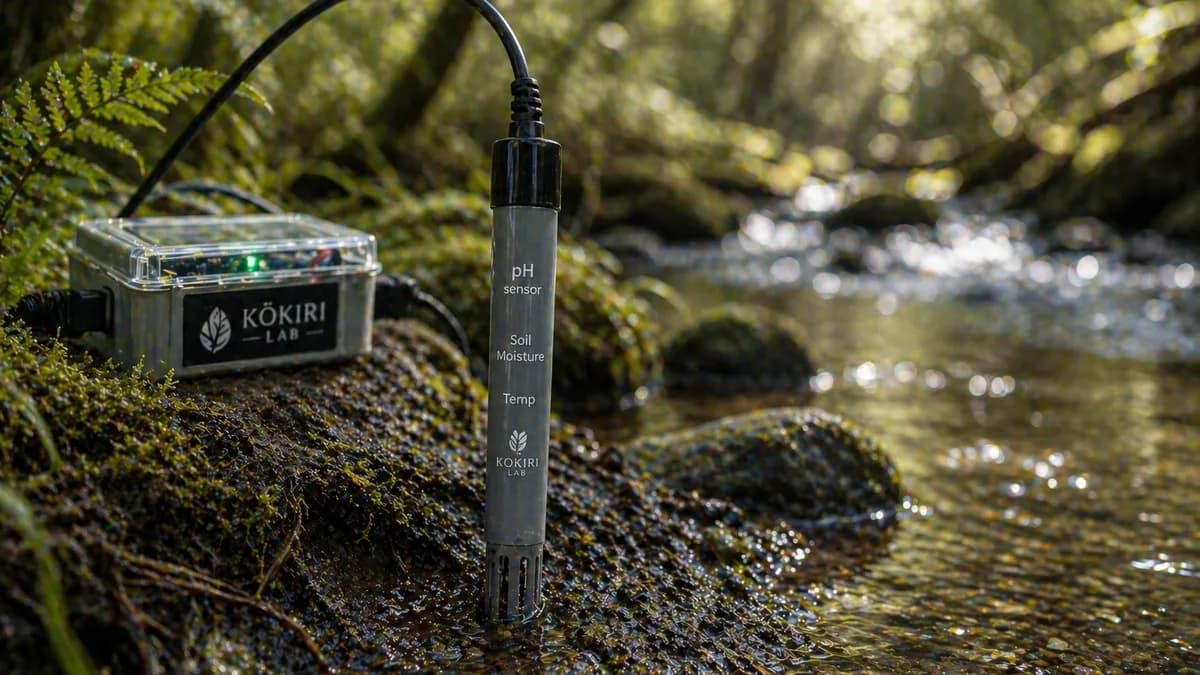
Stream health sensors
Electronics — calibrate, deploy, and trust field readings
How can we sense stream health reliably in our awa — and know when to trust the readings?

Technology inquiry
Stream health sensors
Electronics — calibrate, deploy, and trust field readings
Technological Knowledge · Technological modelling · Electronics
Wero
How can we sense stream health reliably in our awa — and know when to trust the readings?
First step
Calibrate one sensor against a teacher reference solution; log five field readings with location, time, and weather notes.
What you will show
Calibration record plus field dataset with explicit uncertainty and next measurement plan.
Local place context
Where will you deploy sensors — and who needs to approve access to that awa?
Technological Knowledge · Technological modelling · Electronics
First step
Calibrate one sensor against a teacher reference solution; log five field readings with location, time, and weather notes.
Expected outcome
Calibration record plus field dataset with explicit uncertainty and next measurement plan.
You will measure simple indicators of stream health at one or more sites and compare them over time. What sensor readings suggest about the health of your local awa and how readings change across sites and times. Temperature, conductivity, pH, turbidity (visual scale), and a flow note for each visit.
Five ways you could investigate
Pick one to start — or write your own question. The AI mentor supports you gently inside your investigation.
Idea 1
Calibration drift
Does the sensor read the same before and after field deployment?
Start with this question →Idea 2
Placement depth
Do readings change at 5 cm vs 15 cm depth?
Start with this question →Idea 3
Noise vs signal
What single environmental factor creates the most reading noise?
Start with this question →Idea 4
Sampling interval
Does logging every minute vs every ten minutes change your conclusion?
Start with this question →Idea 5
Sensor vs manual test
When do automated and manual readings disagree — and why?
Start with this question →
Five things you could build
Fabrication ideas linked to makerspace tools — 3D print, laser cut, Arduino, data products, and more.
Build 1
Stream sensor mount
3D print a bracket for stable probe placement.
Open in outcome selector →Build 2
Waterproof enclosure
Laser-cut panels that house electronics safely.
Open in outcome selector →Build 3
Field labels
Vinyl-cut site IDs matching your data log.
Open in outcome selector →Build 4
Live data dashboard mock-up
Sketch how classmates would read your stream data.
Open in outcome selector →Build 5
Threshold alarm sketch
Program a simple alert when readings cross a defended limit.
Open in outcome selector →
AI mentor (inside your investigation)
No separate mentor page — support appears in your investigation workspace. It starts gentle: short prompts about your research context, data, and analysis. You or your teacher can turn assistance off for unassisted work, or request more help when you need it. It also guides fabrication choices tied to your evidence.