Laser-cut monitoring stations
Spatial design — structures that last outdoors
How do we design monitoring structures that people can read, trust, and maintain outdoors?

Technology inquiry
Laser-cut monitoring stations
Spatial design — structures that last outdoors
Technological Practice · Brief development · Structures
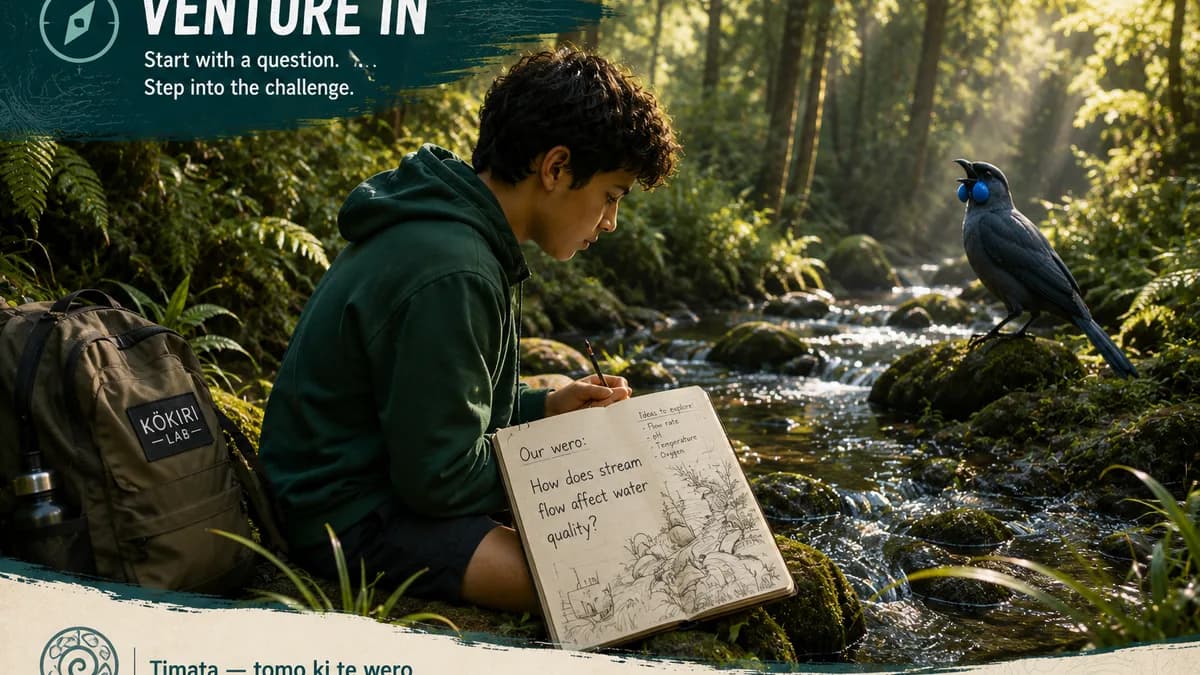
Wero
How do we design monitoring structures that people can read, trust, and maintain outdoors?
First step
Draft a brief from field evidence; laser-cut v1; test readability at 3 m and note weathering after outdoor exposure.
What you will show
Station design with assembly diagram, public labels, and maintenance notes for kaitiaki.
Local place context
What structure or habitat are you monitoring — note laser safety induction.
Technological Practice · Brief development · Structures
First step
Draft a brief from field evidence; laser-cut v1; test readability at 3 m and note weathering after outdoor exposure.
Expected outcome
Station design with assembly diagram, public labels, and maintenance notes for kaitiaki.
You will design and cut a wooden totem or field marker that supports an inquiry site or shares a story about it. How design choices in a public-facing physical object can carry scientific meaning without overstating certainty. Design notes, audience feedback, and a placement plan.
Five ways you could investigate
Pick one to start — or write your own question. The AI mentor supports you gently inside your investigation.
Idea 1
Material thickness test
Does plywood thickness change rigidity at your site?
Start with this question →Idea 2
Joint type comparison
Which joint survives outdoor conditions longest?
Start with this question →Idea 3
Signage readability
Can visitors read labels at 3 m — what evidence proves it?
Start with this question →Idea 4
Weathering log
How does rain or sun change the station across outdoor exposure?
Start with this question →Idea 5
Assembly time
Does a redesign cut build time without losing strength?
Start with this question →
Five things you could build
Fabrication ideas linked to makerspace tools — 3D print, laser cut, Arduino, data products, and more.
Build 1
Totem / site marker
Laser-cut a marker matching your monitoring protocol.
Open in outcome selector →Build 2
Monitoring enclosure
Panels that house traps or sensors neatly.
Open in outcome selector →Build 3
Display stand
Stand for public explanation of your station.
Open in outcome selector →Build 4
Weatherproof vinyl labels
Cut durable IDs for each station point.
Open in outcome selector →Build 5
Station map poster
Map stations with photos and purpose.
Open in outcome selector →
AI mentor (inside your investigation)
No separate mentor page — support appears in your investigation workspace. It starts gentle: short prompts about your research context, data, and analysis. You or your teacher can turn assistance off for unassisted work, or request more help when you need it. It also guides fabrication choices tied to your evidence.