
Upload your trap photo
No account required. Complete the 4-step habitat session, then upload one or many photos from the same night.
Weeks 7–8 of your 8-week cycle
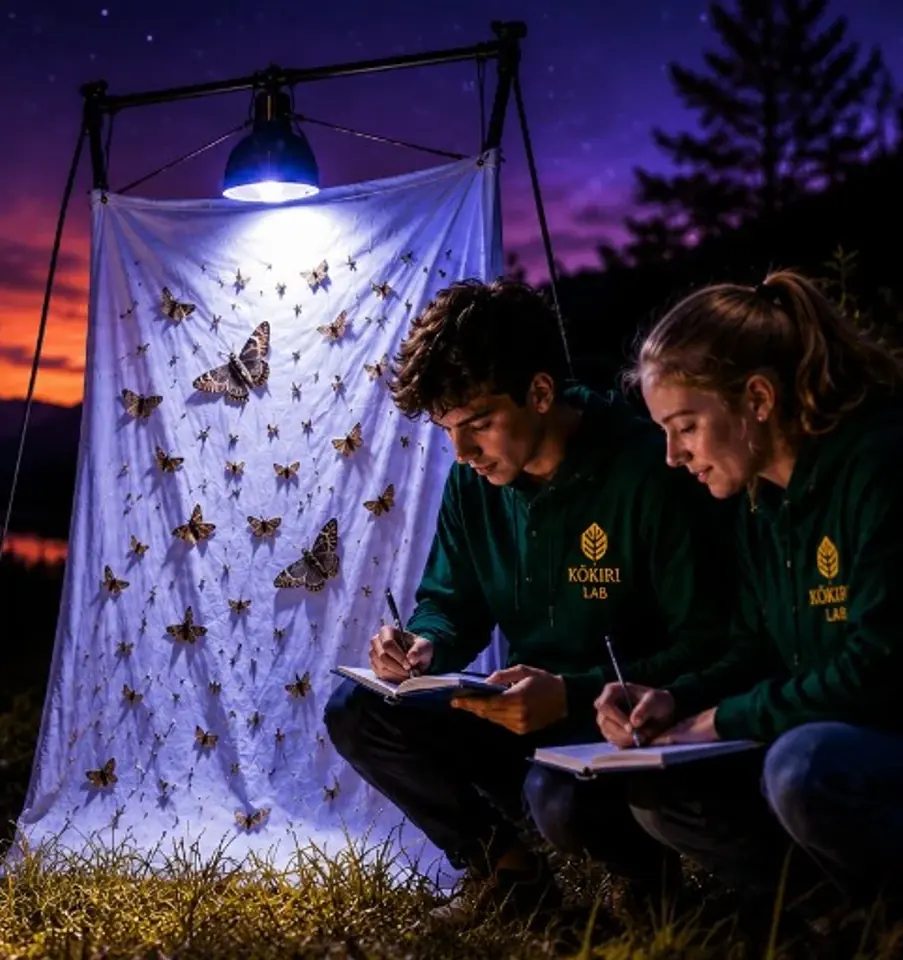
Before Week 7 (an evening or weekend, not a classroom hour): run the actual trap night. Set up the sheet, run it for an hour, and photograph everything that lands — see the setup guide below.
Hour 1 (Week 7, in class): Submit your session through this form, pick a mission, and see the AI identification results come back. Discuss what you found as a class.
No evening/weekend window this week? Use this hour to process last term's data instead — open My Contributions and look at your class's results together.
What a good trap photo looks like
Plain white sheet, moth centred, night lighting — this matches how the model was trained (spec 02).
- White sheet fills most of the background
- Moth in focus, reasonably large in the frame
- Taken at night with your trap light — not a daylight garden close-up
- No hands, grass, or dark shadows behind the insect if you can avoid it
Low-budget light trap setup (NZD 25–40)
Sheet-and-light method — non-lethal, phone-friendly, consistent with the AI training protocol.
| Item | Budget option | Notes |
|---|---|---|
| White sheet | Old bedsheet or $15 fabric | Plain white, no pattern |
| 395 nm UV LED | $10–25 torch or strip | Standard safe wavelength for moths |
| Power | USB power bank | Runs many hours overnight |
1. Choose a dark spot
Away from streetlights and porch lights — competing light matters more than almost anything else.
2. Hang a white sheet
Between trees, on a line, or over a fence — reasonably flat and vertical.
3. Position UV light 0.3–1 m from sheet
Lit toward the sheet, not into your eyes. Run from dusk for 1–2+ hours.
4. Photograph settled moths
Check every 15–30 minutes. Fill the frame with moth + white background.
5. Switch off before sunrise
Lets moths disperse before birds become active.
Honest expectations
- A quiet night is useful data — not a failure.
- UV LED sheet traps catch fewer species than mercury-vapour traps but are cheaper, safer, and non-lethal.
- Use 395 nm UV only — avoid short-wavelength UV under 315 nm for extended exposure.
Your contributions are tied to this browser only (privacy & data). No account required.