
Kōkiri Lab · Share & impact · Community science
Share & impact · 03 · Make · Community science · Flight & biomimicry
Design, fly, and learn from NZ nature
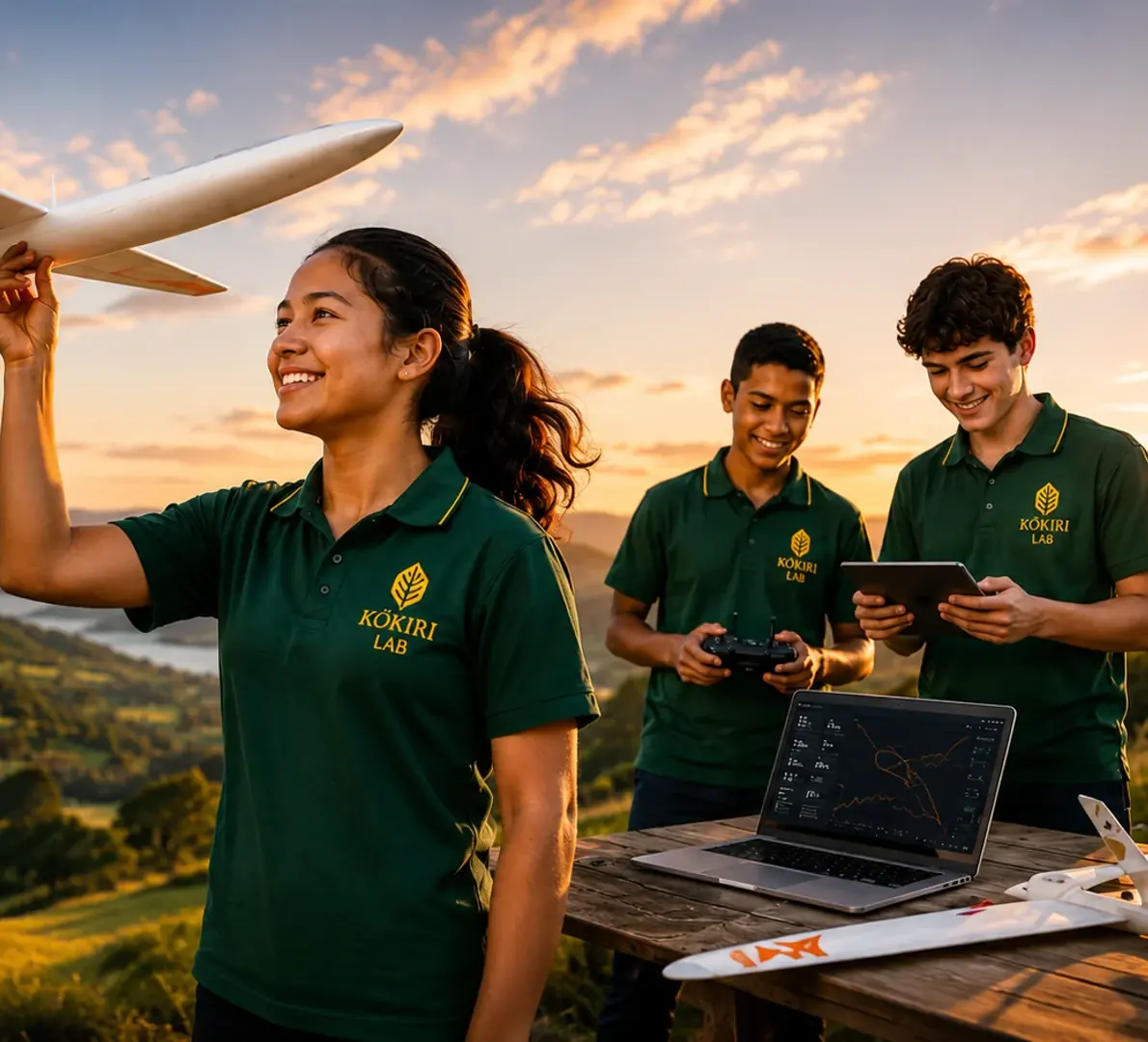
Record glider and wing tests — launch conditions, distance, stability — and build a flight school picture from fair tests across Aotearoa.
Open: Launch distance, stability, and conditions from home or club. · School: Earth Systems & Space inquiry world
Where SkyLab fits in the curriculum
The specialist platform for Earth Systems & Space.
SkyLab's current open log records paper glider and wing flight tests. Its Earth and space tools for this world are still being designed.
Platforms are developed in response to curriculum and inquiry requirements, not the reverse.
Why your contribution matters
Nature solved flight long before people did. Careful, fair flight tests from many classes build a shared picture of which wing shapes really work, and why.
- Your class, to test designs fairly and explain the results.
- Other classes, who can repeat your best designs and check them.
- Anyone learning how wings, seeds and birds fly.
Community missions
Pick a mission for your class, your family or a group of schools.
Wing shape showdown
Long and thin, or short and wide: which paper glider glides furthest?
- Build two gliders that differ only in wing shape.
- Launch each 5 times the same way.
- Upload the distances and your design photos.
Nose weight challenge
How much weight on the nose gives the longest, steadiest glide?
- Add paper clips one at a time.
- Test each setting 3 times.
- Find the 'sweet spot' and explain it.
Seed flyers
Some seeds spin or glide to travel far from their parent tree. Can you copy one?
- Collect winged or fluffy seeds (with permission).
- Drop them from the same height and time the fall.
- Build a paper model that copies the best one.
For teachers and schools: work together
- Challenge another class: publish your best glider design and see if they can beat it using the same launch method.
- Build a shared 'fair launch' rule card, the same height and push every time, so results from different schools can be compared.
- Hold a flight day where whānau see the designs and the evidence behind them.
Take it further: bigger NZ projects
- Aerofoils and paper planes
Science Learning Hub activity on wing shape, angle and nose weight.
- Observing wings for flight
How wing size and shape suit birds and aircraft.
- Science Learning Hub: citizen science
Many more NZ projects your class can join, with teacher guides.
Share observations, not people: no names, no faces, no home addresses. A place nickname and region are enough.
How it works
Design → Build → Test → Analyse
Design
Sketch one wing change — broad, narrow, or biomimicry-inspired.
Build
Paper or card — fresh creases between profile comparisons.
Test
Three launches, same force, calm weather — measure horizontal distance.
Analyse
Median distance and flight path — stability counts as much as metres.
Show, don't just tell
Example flight log
- Profile
- Broad glider
- Launch
- Medium · calm day
- Distance
- 8.4 m · straight glide
Three throws with identical launch — log median distance, not your luckiest throw.
Borrowed from MaramaTrap's example-photo pattern — works for every platform.
Aerodynamics & biomimicry
Kererū, kārearea, and harakeke seeds inspire real engineering questions.
Bird flight
Broad wings glide slowly; pointed wings trade stability for speed.
Fair tests
Change one variable — usually wing shape — and keep launch identical.
Biomimicry
Name the natural flyer or seed that inspired your profile in notes.
Good to know
Broad glider
Slow and stable — often shorter distance.
Long narrow wing
Can glide far if balanced well.
Distance ≠ best design
Stability and repeatability matter too.
Also try community science
The same fair-testing habits work across platforms — honest notes, repeat visits, no street addresses.
MaramaTrap
Community moth monitoring for Aotearoa
Explore →AwaKai
Aquaponics water logs for growing food
Explore →NuiBot
Robots as research partners
Explore →KāingaLab
Model-home fair tests for Ecohome & Design
Explore →AraQuest
Build a world, test how it behaves
Explore →