
Evidence-claim linkage
- Starting out
- What evidence supports this claim?
- Going further
- How strong is the evidence, what alternative explanations remain, and what evidence would change our conclusion?
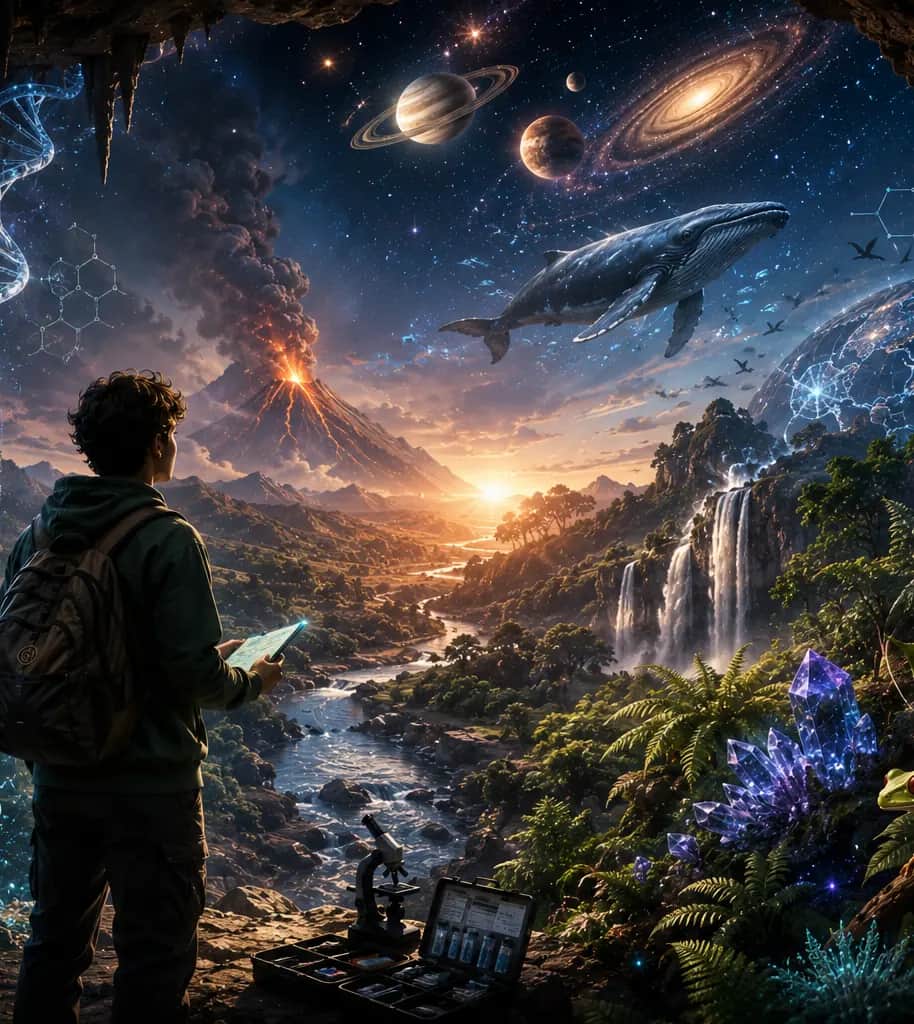
World 04 · Any term · Combined Year 7–8 class
How can we understand what we cannot directly observe?
Your mission
Sky and Stone Detectives: knowing what we can't see.
What you'll make
A tested Earth–Moon–Sun model that predicts the Moon, and an explanation of how rocks form and why we use them.
Who it's for
Your class, whānau and the SkyLab community
How long
About nine one-hour sessions, in any term. It can be shorter or longer.
NZ curriculum, Years 7–8:Science: Earth and SpaceScience: Matter Interactions and Energy· Topics: Moon phases, Earth, Moon and Sun, Maramataka, rocks and minerals, the rock cycle, fossils, Whanganui geology, light
Your journey
Tap a week to see that lesson. Each world runs as nine one-hour weeks; it can be shortened to five weeks or stretched to 11–12.
Week 1Open →
What our Moon Diary shows
Ask · Look closely
VOICE Question · Observe
Week 2Open →
Why does the Moon change shape?
Collect evidence · Compare
VOICE Evidence · Compare
Week 3Open →
Test the model
Build it · Test it
FORGE Generate · Test
Week 4Open →
Maramataka
Look closely · Make sense of it
VOICE Observe · Interpret
Week 5Open →
What is the Earth made of?
Look closely · Collect evidence · Compare
VOICE Observe · Evidence · Compare
Week 6Open →
Rocks change
Make sense of it · Say what we found
VOICE Interpret · Finding
Week 7Open →
Properties and uses
Test it · Judge it
FORGE Test · Evaluate
Week 8Open →
Improve and prepare
Improve it
FORGE Refine
Week 9Open →
Share
Explain and share
FORGE Explain
5 weeks
Quick build
A tested Moon model that predicts next week's phase, with your Moon Diary graph.
9 weeks
Full journey
A tested Moon model, a Maramataka-informed plan (with a knowledge-holder), rock classification and an explanation of rock uses.
11–12 weeks
Go further
A geology field trip, light experiments with a periscope, or the SkyLab community Moon log.
Big ideas
Earth has observable and predictable patterns as it orbits the Sun.
Earth's crust contains natural materials that form, change and are used by humans.
Evidence and models let us understand phenomena we cannot directly observe.
Up close
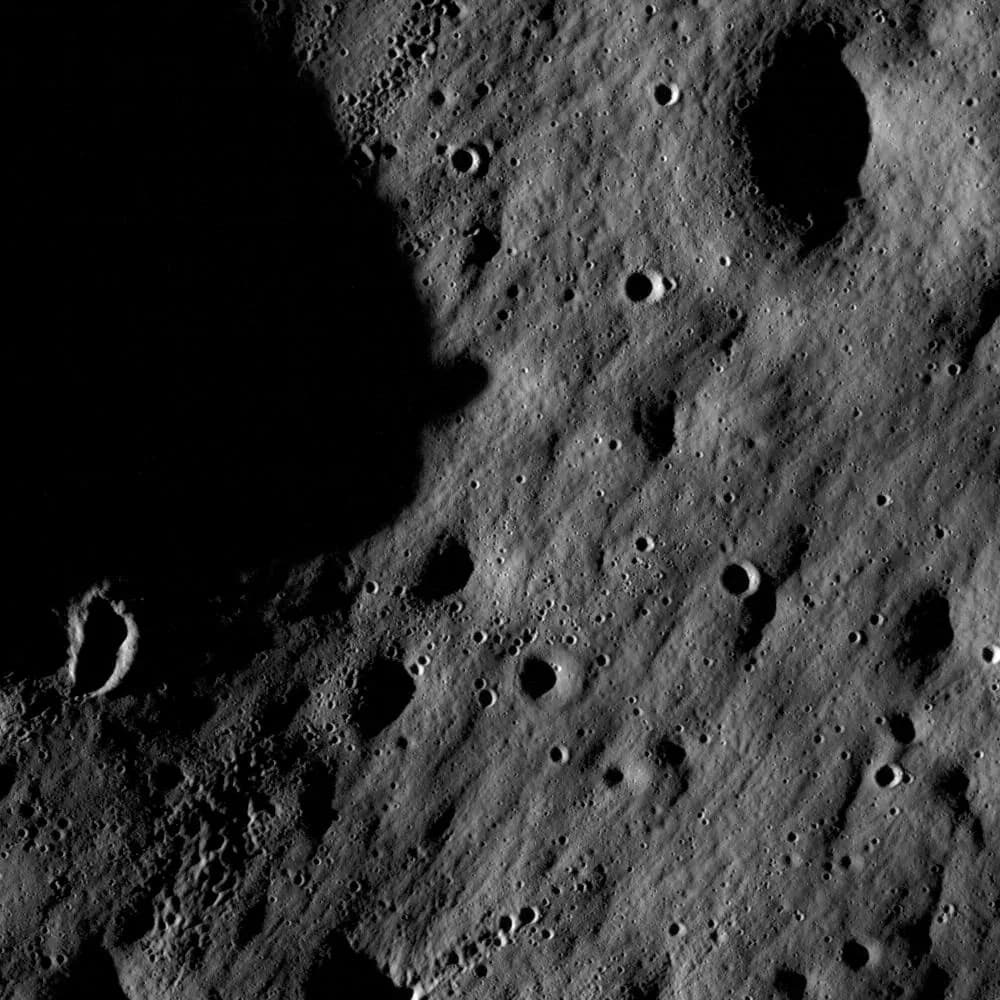
The Moon's surface, photographed by NASA's Lunar Reconnaissance Orbiter.
Photo: NASA on The Commons, No known copyright restrictions, via Wikimedia Commons
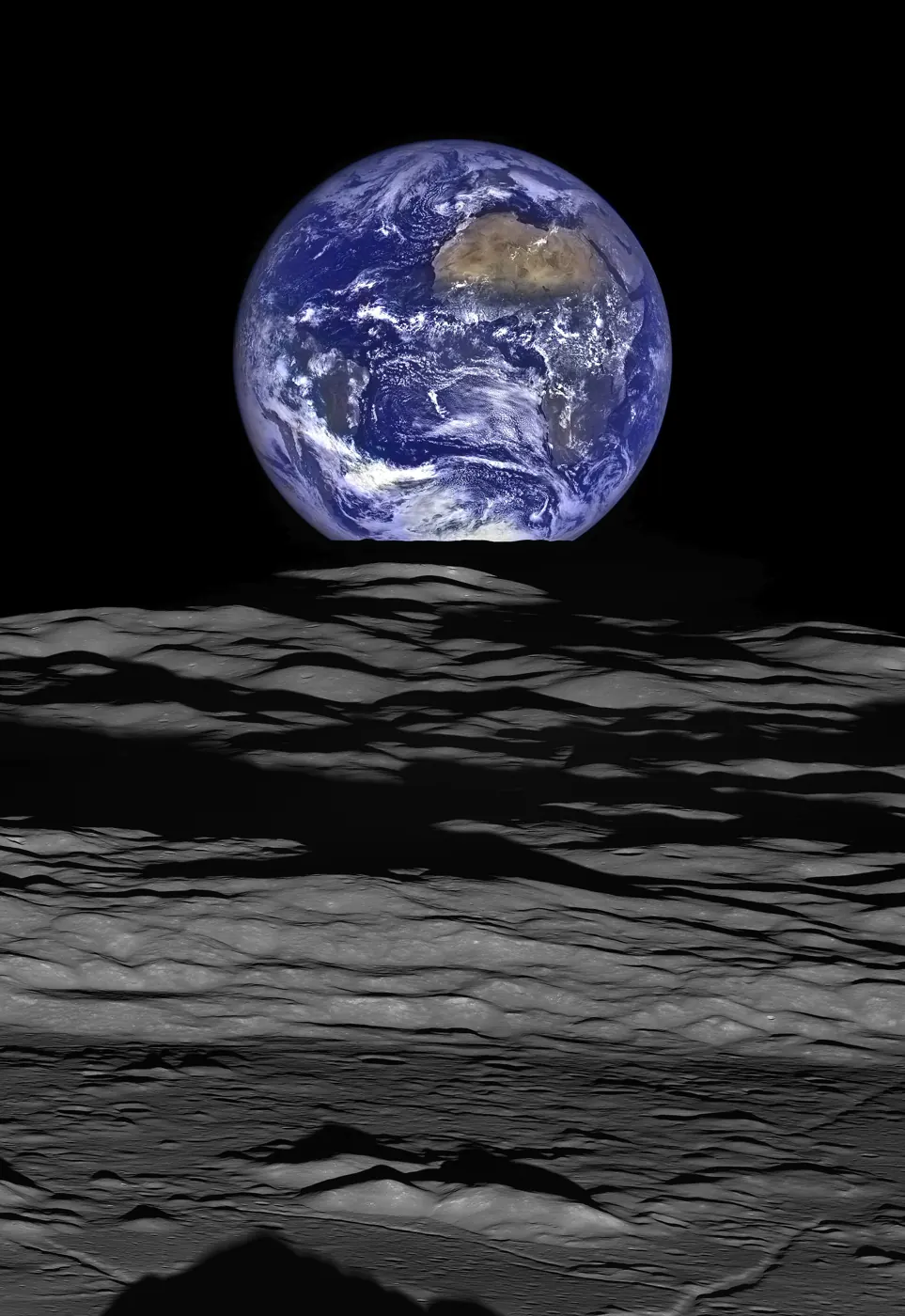
Earth rising over the Moon's horizon, seen from lunar orbit.
Photo: NASA / Goddard Space Flight Center / Arizona State University, Public domain, via Wikimedia Commons
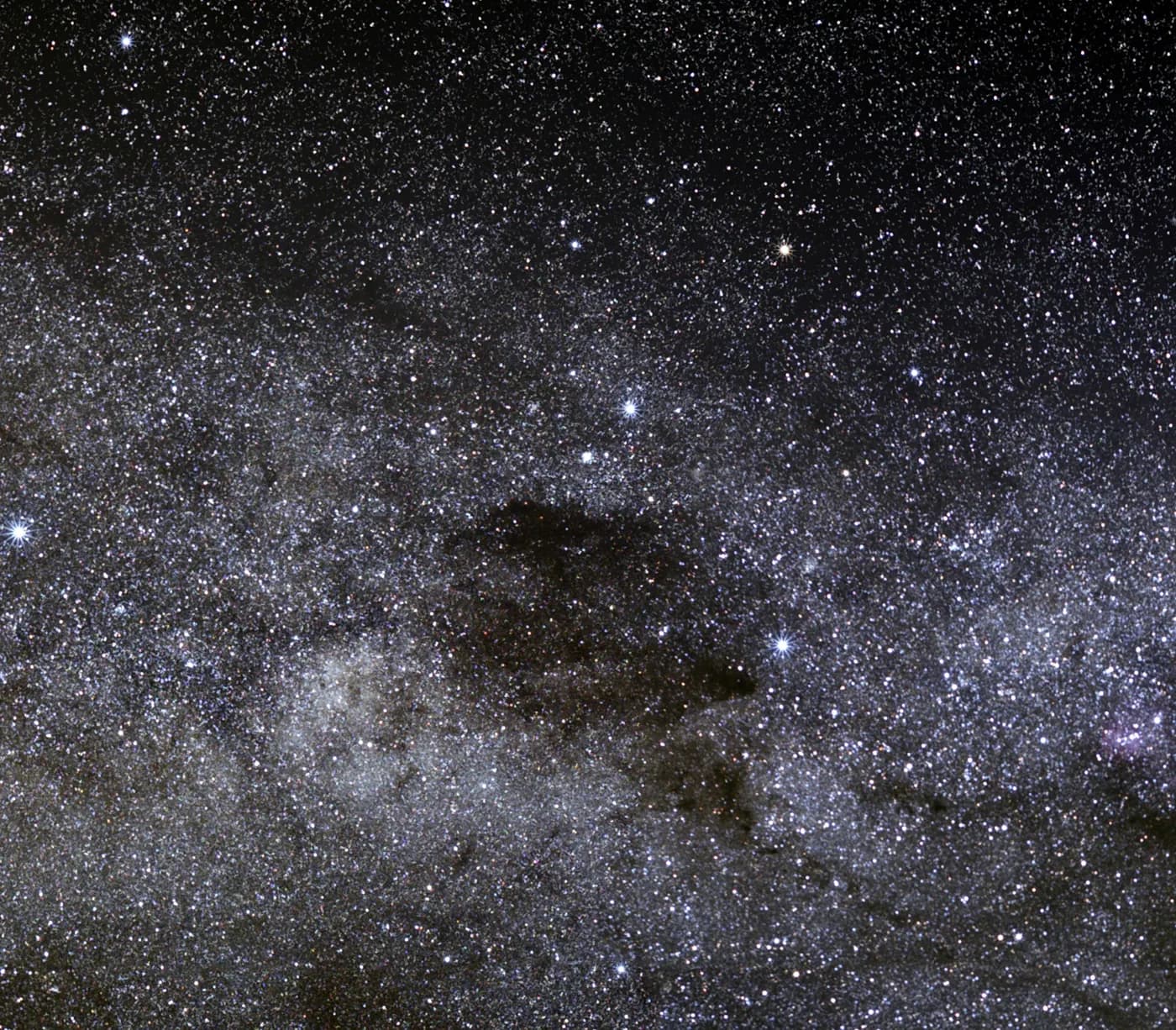
The Southern Cross and the dark Coalsack nebula: stars used for finding south.
Photo: ESO/S. Brunier, CC BY 4.0, via Wikimedia Commons
Read first
Push a 1-metre stick into flat, sunny ground and mark the tip of its shadow every 15 minutes. The shadow moves and changes length through the day, because the Sun appears to move across the sky. Graph shadow length against time and you can find when the Sun was highest (the shortest shadow).
Think about it: Would the shortest shadow be the same length in June and December? What would you predict?
Source: WIS science badge lesson "Shadow Tracking and Māori Maramataka".
In geological terms, New Zealand is young. It is being pushed up out of the sea by the collision of two tectonic plates, the Pacific plate and the Indo-Australian plate. Earthquakes and volcanoes come with this movement.
Because the land rose from the sea, much of it is made of soft marine sediments: mudstones, siltstones and sandstones that formed under the sea. Underneath is a harder, compressed rock called greywacke. Where the land has risen fastest (the main mountain ranges), the soft rock has been worn away and the greywacke shows. Soft rock erodes easily, which is why slips, slumps and earthflows are common in hill country.
Think about it: If rocks on a hill formed under the sea, what might you find inside them? How could they have got there?
Source: Massey "Intermediate Freshwater Farm Environment Plan" geology readings (2020 Courses Content).
Rain breaks down rock and soil, rivers carry the pieces away, and the sediment is dropped (deposited) further downstream or out at sea. This is erosion and deposition. It happens naturally, but removing forest has made it faster in many places, because tree roots help hold soil together.
Think about it: Which would erode faster in heavy rain: a bare hillside or one covered in native bush? How could we test this with a model?
Source: Massey freshwater farm plan geology and erosion readings.
The real distances in the solar system are far too big to model at full size, so we shrink them. At a scale of 1 metre = 100 million km, on the school field:
| Planet | Real distance from the Sun (million km) | Model distance |
|---|---|---|
| Mercury | 57.9 | 0.58 m |
| Earth | 149.6 | 1.50 m |
| Mars | 227.9 | 2.28 m |
| Jupiter | 778.3 | 7.78 m |
| Saturn | 1,427 | 14.27 m |
| Neptune | 4,498 | 44.98 m |
The four inner planets fit within about two and a half metres of the Sun. Neptune is almost 45 metres away. The planets are not spaced evenly at all.
Think about it: How much further from the Sun is Neptune than Earth? Why can't a poster show the planets' sizes and distances at the same scale?
Source: WIS science badge lesson "Te Whānau a Rangi: Scale Model of the Solar System".
One more reading draws on mātauranga Māori and will appear once our cultural advisor has checked it.
Go deeper: from Science Learning Hub and DOC
The coastal cliffs near Whanganui are one of the few places in the world where so many layers of young sedimentary rock are on show.
The layers stack like pages in a diary: oldest at the bottom, youngest at the top, tilted slightly by movements of the Earth. Walk west along the beach at low tide and the rocks get older.
How old? Scientists date the layers two ways. Relative dating uses their order. Absolute dating uses tiny zircon crystals in layers of volcanic ash (tephra) that blew in from central North Island eruptions: the Onepuhi tephra is about 570,000 years old, and the Kupe tephra about 640,000 years.
Shells tell the story. Many fossil shells in the cliffs match species alive today, so they show whether the sea was deep or shallow, warm or cool. Each layer formed in a warm period with high sea level; the breaks between layers mark cold ice ages, when the sea dropped and the land was worn away.
The cliffs record about 50 cycles of sea level going up and down. Before about a million years ago each cycle took about 41,000 years; since then, about 100,000 years.
Think about it: If you found a fossil shell high in a cliff, what two things would it tell you about the past?
Adapted for Kōkiri Lab from “Whanganui rocks and climate cycles”. Source: Science Learning Hub – Pokapū Akoranga Pūtaiao, The University of Waikato Te Whare Wānanga o Waikato, www.sciencelearn.org.nz Read the original
Rocks are made of minerals. There are three main types of rock, and any one can turn into the others over long periods of time.
| Type | How it forms | Examples |
|---|---|---|
| Igneous | Melted rock (magma) cools. Fast cooling above ground makes volcanic rock; slow cooling underground makes plutonic rock | Basalt, andesite, rhyolite (volcanic); granite (plutonic) |
| Sedimentary | Worn-away pieces of rock are carried by water or wind, settle in layers on sea or lake floors, and are pressed and cemented together. Fossils are often trapped inside | Sandstone, mudstone, limestone |
| Metamorphic | Heat and pressure change existing rock | Marble (from limestone) |
Under the North Island, one plate of the Earth's crust slides beneath another and is carried deep enough to melt, starting the cycle again. The Earth is about 4.6 billion years old, but its rocks are recycled so often that you won't find rocks that old.
Think about it: Choose a rock from our kit. Which type is it, what is your evidence, and what could it become next?
Adapted for Kōkiri Lab from “The rock cycle”. Source: Science Learning Hub – Pokapū Akoranga Pūtaiao, The University of Waikato Te Whare Wānanga o Waikato, www.sciencelearn.org.nz Read the original
Explore more
These links open other websites. Kōkiri Lab checked them in September 2026.
How you'll learn
What evidence can we gather?
Students encounter the phenomenon, build the knowledge needed to interpret it, and gather evidence directly.
This is not a strict pipeline. A student may investigate, model, test, investigate again, revise, and communicate, in whatever order the actual inquiry demands.
Make something
Science investigations
VOICE: ask a question and find out with evidence
You need
Moon diary sheet · clear nights (at home, with whānau)
Steps
How you'll know: Your prediction matches, or you can explain why it didn't.
Go further: Estimate how much later the Moon rises each night.
Fits Week 1 →You need
1 m stick · chalk · tape measure · compass
Steps
How you'll know: The shortest shadow shows when the Sun is highest. Which way does the shadow point then?
Never look directly at the Sun.
Go further: Repeat a month later. What changed?
Fits Week 2 →You need
rock kit · hand lens · steel nail · streak plate · goggles
Steps
How you'll know: You name the type and give two pieces of evidence for it.
Goggles for scratch tests.
Go further: Classify a mystery rock and defend your answer.
Fits Week 5 →Build projects
FORGE: design, make, test and improve
You need
bare-bulb lamp · polystyrene ball on a stick · dark room
Steps
How you'll know: Your model shows why we see crescents, quarters and a full Moon.
Don't touch the hot bulb.
Go further: Use the model to explain an eclipse.
Fits Week 2 →You need
crayon shavings or coloured sand · foil · warm water (teacher-managed)
Steps
How you'll know: You can point to each stage and explain what real process it stands for.
Teacher handles any heat.
Go further: Explain how a shell ends up high in a Whanganui cliff.
Fits Week 6 →You need
tape measure · cones or chalk · a long field
Steps
How you'll know: You can explain why the inner planets are close together and the outer ones are far apart.
Go further: Work out how big Earth would be at this scale.
Fits Week 8 →More ideas from the Kōkiri library
Background learning
Earlier Kōkiri inquiries with learn pages, activities and build ideas that fit this world. They were written before the eight-world curriculum, so use them as background and pick what helps.
Makerspace build ideas
Ready-made ideas from the Kōkiri maker library that suit the Make & Test part of this world.
Stretch challenges
Where AI helps
Kōkako, your AI mentor
Weeks 2–3 and 5–6
Not AI: people
Week 4, Maramataka
Our AI promise
Your platform
The specialist platform for this world. Its Earth and space tools are still being designed.
SkyLab's current open log records paper glider and wing flight tests. Its Earth and space tools for this world are still being designed.
Open SkyLabTaught to the whole combined class. Over the two-year programme the class covers both the Year 7 and Year 8 curriculum statements.
The whole combined Year 7–8 class investigates the same phenomenon, with the same fieldwork, equipment and inquiry problem. Instead of splitting the class by year level, every task has three levels of support (Getting started, On track, Stretch), so each learner goes as deep as they are ready to.
Reasoning about phenomena that cannot be directly seen forces evidence and claims to be connected explicitly.
All five dimensions recur across every world. Each world provides a context in which one or more becomes especially visible, not an exclusive assignment.
Document 33 stage names, used across Kōkiri. The week plan above shows which stages each week works in.
Te reo groupings shown are provisional, pending cultural advisor review.
Mainly in STEM Investigate and Think & Create.
Kite · te reo group (provisional)
Whakaaro · te reo group (provisional)
Mainly in Make & Test, ending with Explain in Share & Impact.
Wero · te reo group (provisional)
Kite · te reo group (provisional)
Whakaaro · te reo group (provisional)
Auaha · te reo group (provisional)
Tohu · te reo group (provisional)
Māori navigation and star knowledge; the Maramataka, a sophisticated observational system rather than a poetic seasonal description (Hikuroa, 2017); national geology, earthquakes, mining and mapping; local geology and landscape history around Whanganui.