
Kōkiri Lab · Share & impact · Community science
Share & impact · 05 · Design · Community science · Ecohome & design
Design a home that works for people and place
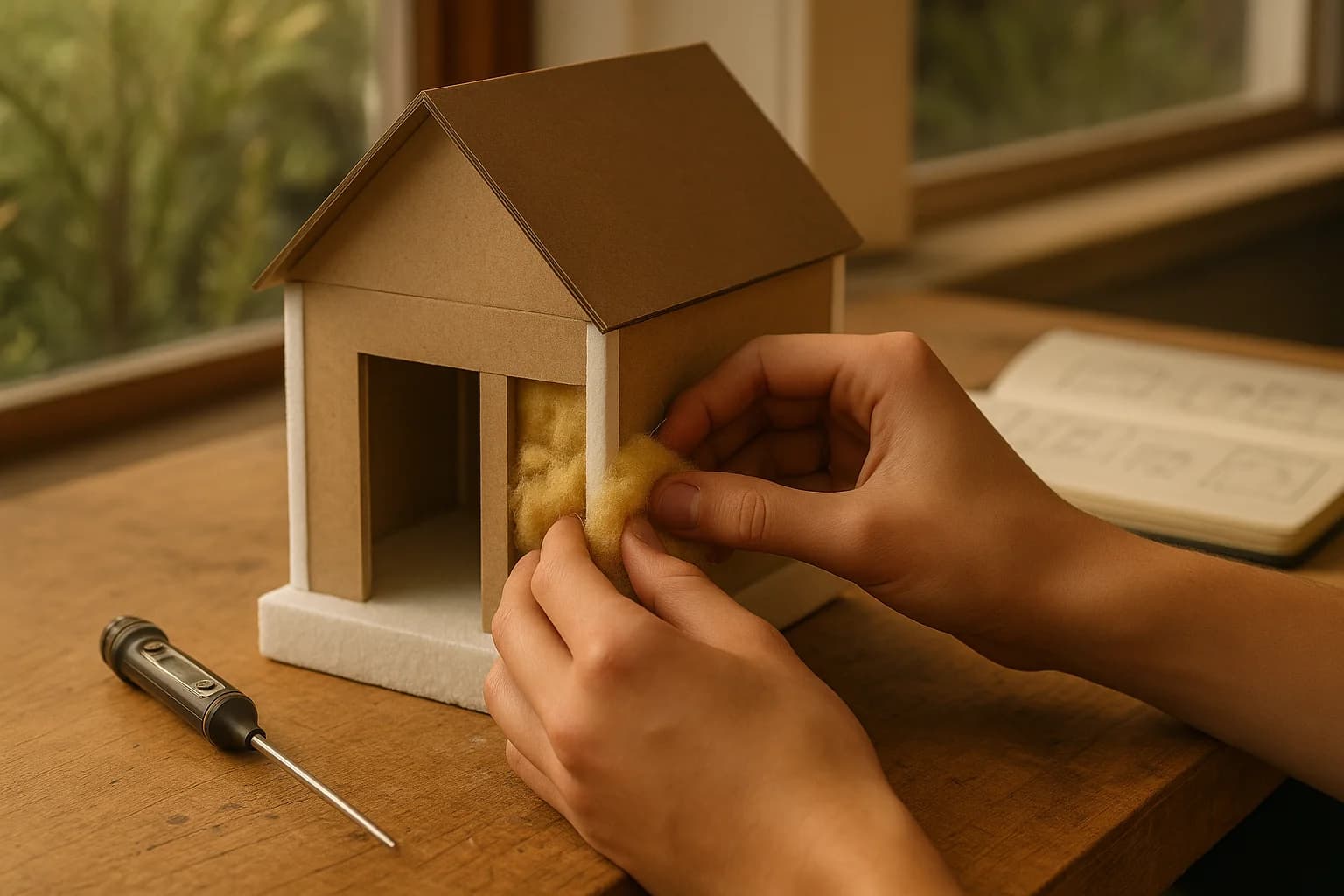
Build a model home, test one feature at a time — insulation, windows, orientation — and log what actually kept it warm.
Open: Model design name, feature tested, and temperature readings. · School: Ecohome & Design inquiry world
Why your contribution matters
Every home is a design decision — how it holds warmth, catches sun, and uses materials. A model you actually test, one feature at a time, teaches more than any picture of a finished house.
- Your class, to design and fair-test a model home (Ecohome & Design).
- Other schools building models, comparing which features made the biggest difference.
- Whānau and local builders interested in what actually keeps a home warm.
Community missions
Pick a mission for your class, your family or a group of schools.
Insulation showdown
Does adding insulation really change the temperature? Prove it with two identical models.
- Build two identical model boxes.
- Insulate one, leave the other bare.
- Leave both outside together and compare indoor temperature.
Sun-facing test
Does which way a window faces change how warm a room gets?
- Build one model, two window positions to test one at a time.
- Record temperature at the same time each day.
- Change only the window position between tests.
Materials challenge
Cardboard, foam, or wood: which wall material holds warmth best?
- Build three small boxes, same size, different wall material.
- Warm each the same way (e.g. same lamp, same time).
- Compare how fast each one cools down.
For teachers and schools: work together
- Design partners: swap model photos with another class and guess which feature they changed before they tell you.
- Agree a 'same test' card — same box size, same thermometer position — so results can be compared fairly.
- Invite whānau or a local builder to see your models and explain your evidence.
Take it further: bigger NZ projects
- Science Learning Hub: citizen science
Many more NZ projects your class can join, with teacher guides.
Share observations, not people: no names, no faces, no home addresses. A place nickname and region are enough.
Where KāingaLab fits in the curriculum
The platform for Ecohome & Design, where fair tests of materials and functional home models come together.
KāingaLab's open log records model-home fair tests — one feature changed at a time, indoor and outdoor temperature compared. Its full ecohome design unit for this world is still being built.
Platforms are developed in response to curriculum and inquiry requirements, not the reverse.
How it works
Design → Build → Test → Compare
Design
Sketch one home feature to test — insulation, glazing, or orientation.
Build
Card, foam, or a kit model — consistent size across versions.
Test
Compare indoor and outdoor temperature under similar conditions.
Compare
One feature changed at a time — trace what mattered across versions.
Show, don't just tell
Example model test
- Design
- Shoebox model v2
- Feature
- Insulation material
- Indoor/outdoor
- 24°C / 14°C
One feature changed from version 1 — insulation added, everything else the same.
Borrowed from MaramaTrap's example-photo pattern — works for every platform.
Designing for people and place
Passive solar, insulation, and materials all change how a home behaves — these ideas help you read your results.
Passive solar
Orientation to the sun changes indoor temperature without using any power.
Insulation
Slows heat moving in or out — the difference shows up as a smaller indoor/outdoor gap.
Fair tests
Change one feature, keep everything else the same, compare like with like.
Good to know
One change at a time
Changing insulation and orientation together means you can't tell which one mattered.
Design versions matter
Your third model teaches more than your first — the record of what changed is the evidence.
Also try community science
The same fair-testing habits work across platforms — honest notes, repeat visits, no street addresses.
MaramaTrap
Community moth monitoring for Aotearoa
Explore →AwaKai
Aquaponics water logs for growing food
Explore →NuiBot
Robots as research partners
Explore →SkyLab
Flight school & biomimicry logs
Explore →AraQuest
Build a world, test how it behaves
Explore →