
Kōkiri Lab · Share & impact · Community science
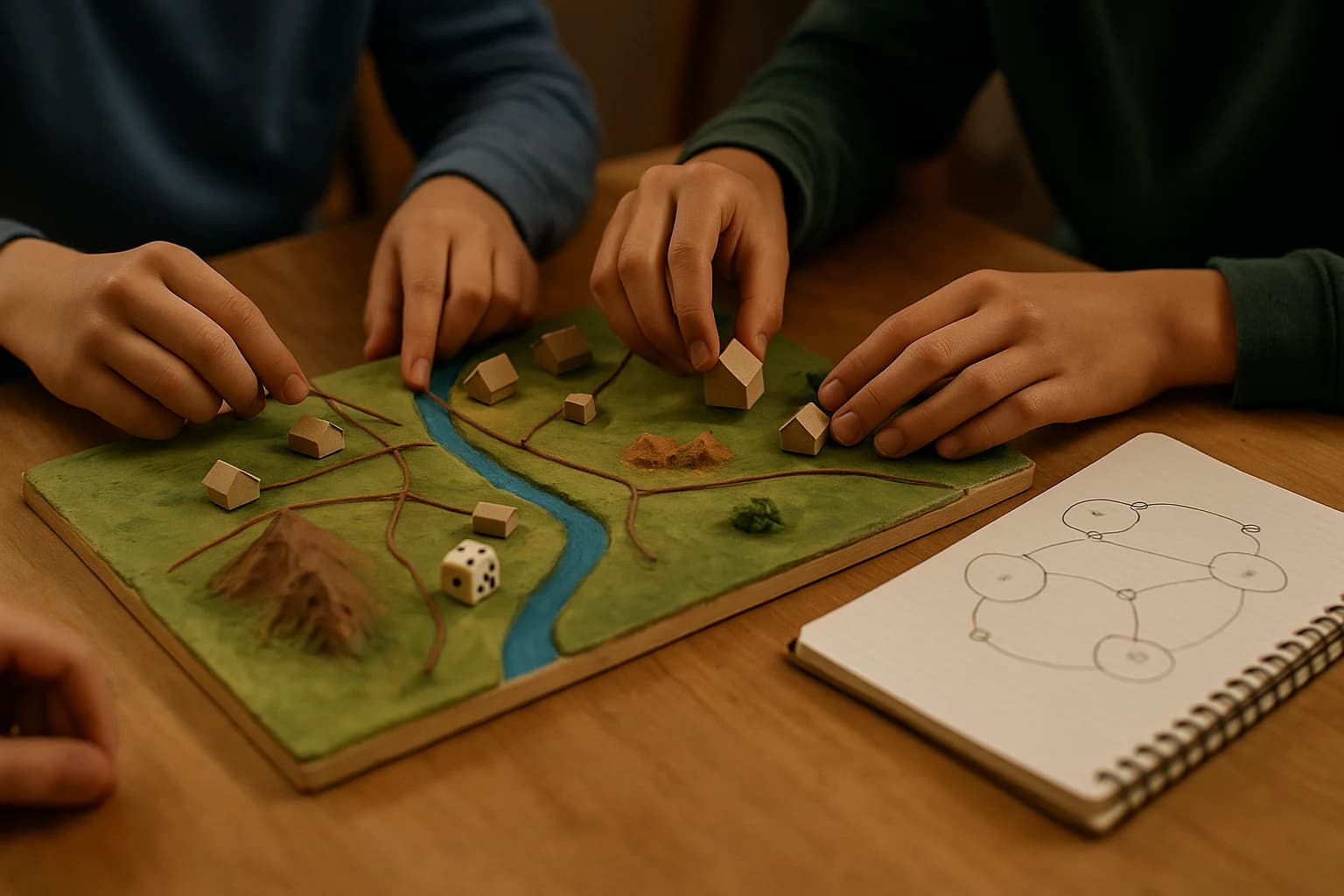
Share & impact · 06 · Build · Community science · Worldbuilding & navigation
Build a world that behaves like a real system
Design a world or system model, decide what to test, and log what actually happened — not just what you expected.
Open: World name, system type, what was tested, and the outcome. · School: Worldbuilding & Navigation inquiry world
Why your contribution matters
Every system — a wetland, a trade route, a settlement — behaves in ways its designer didn't fully predict. Testing a world you built, and being honest about what actually happened, is how systems thinking becomes real.
- Your class, to build and test a system model (Worldbuilding & Navigation).
- Other schools building worlds, comparing what happened when they tested similar systems.
- Anyone curious how small rule changes produce big, sometimes surprising, effects.
Community missions
Pick a mission for your class, your family or a group of schools.
Resource crisis
What happens to your world if one resource runs out? Test it and find out.
- Design a world with at least one resource players depend on.
- Play it through until that resource runs low.
- Record what players actually did — not what you expected.
Blocked route
Remove one path or connection from your world. What changes?
- Map your world's connections (trade, travel, or supply).
- Block one route and play it through again.
- Compare what happened with the route open versus blocked.
Version 2 challenge
Take your first world and change exactly one rule. Does it behave differently?
- Record your world exactly as version 1.
- Change one rule only — write down what and why.
- Test both versions and compare the outcomes.
For teachers and schools: work together
- World swap: trade your world's rules with another class and see if they can predict what will happen before testing it.
- Agree a 'same test' card so results from different worlds can be compared fairly.
- Share your most surprising outcome with another class and ask them to explain why it happened.
Take it further: bigger NZ projects
- Science Learning Hub: citizen science
Many more NZ projects your class can join, with teacher guides.
Share observations, not people: no names, no faces, no home addresses. A place nickname and region are enough.
Where AraQuest fits in the curriculum
The platform for Worldbuilding & Navigation, where students build a playable model of a real system.
AraQuest's open log records world and system model tests — what was built, what was tested, what happened. Its full worldbuilding and navigation unit for this world is still being built.
Platforms are developed in response to curriculum and inquiry requirements, not the reverse.
How it works
Build → Decide → Test → Explain
Build
Design a world with rules that connect to each other, not just a setting.
Decide
Choose one thing to test — what happens if a resource runs out?
Test
Play it through — on paper, with others, or as a simple digital model.
Explain
Record what happened and why — surprises are the most useful part.
Show, don't just tell
Example world test
- World
- Flooded Valley v3
- System
- Ecosystem / restoration model
- Outcome
- Trading route removed — players cooperated more
What actually happened when tested, not just what was designed.
Borrowed from MaramaTrap's example-photo pattern — works for every platform.
Systems thinking for worldbuilders
Real systems connect — resources to population, water to fish, routes to trade. These ideas help you test your world honestly.
System relationships
One part of a world affecting another is the interesting part, not just how it looks.
Version thinking
Your third design usually teaches more than your first — track what changed.
Evidence over expectation
What actually happened when you tested it matters more than what you predicted.
Good to know
Systems, not just settings
The interesting part is how one part of your world affects another, not just what it looks like.
Test before you polish
A rough version that reveals a problem is worth more than a beautiful one that hides it.
Also try community science
The same fair-testing habits work across platforms — honest notes, repeat visits, no street addresses.
MaramaTrap
Community moth monitoring for Aotearoa
Explore →AwaKai
Aquaponics water logs for growing food
Explore →NuiBot
Robots as research partners
Explore →SkyLab
Flight school & biomimicry logs
Explore →KāingaLab
Model-home fair tests for Ecohome & Design
Explore →